United States: Keeping Guantanamo Open Shames A Nation That Espouses Liberty

imagesThe United States has consistently lost the communication battle in the War on Terror (WoT) to a bunch of self-styled propagandists who, even when combined, don’t have half the resources of the US government (USG).

Consequently, while the US can win short-term battles due to the civil-rights destroying capabilities of its security organizations, long-term success will come only when the USG is able to stop people from becoming its enemies in the first place, and this cannot happen if it continues to lose the messaging battle to its low-cost opponents.

Some of this could be blamed on the USG’s ineptitude in conveying its message and the contradictory nature of its policies – killing people with drones as if life was a video game does not engender positive feelings for those moving the joystick.

However, there are a number of USG agencies and American companies trying to do good things around the world but their message stands no chance of being heard over the din of Guantanamo.

This has been particularly true over the past few months as the Guantanamo Bay Detention Camp (GBDC) has returned to prominence due to the hunger strikes of a majority of those residing at the Camp.

While the world has been stunned at how the US military has been treating those participating in the strikes – force feeding never looks good – the reaction of the country’s political class, especially on the right, has been at best, preposterous, and at worst, dangerous.

Republican Senator Lindsay Graham’s statement that the “American people don’t want to close Guantanamo Bay … to bring these crazy bastards … to the United States” is one example of the numerous idiotic statements being spewed on this topic.

Senator Graham’s credibility, by the way, on representing the wishes of the American people is a little shaky since he voted against a gun-control law that is supported by a vast majority of the country’s citizens.

This view shows a stunning lack of understanding of why GBDC should be closed, some of which are that keeping it open is unethical, against American values and defeats any positive action taken by the USG.

Even putting these esoteric reasons aside, detaining these individuals at GBCD ignores the fact that a number of them have been cleared of any wrongdoing or being of any future threat to the US.

Obviously, the problem with unloading these individuals is that they have been tainted with the stench of suspicion and this makes it more difficult for the US to send them to another nation – even if it may be that individual’s home country.

This leaves Washington stuck between a rock and a hard – but not impossible – place as the USG can take a number of actions to worm its way out of this quandary.

The first action the USG could take is to simply to act as if it was working hard towards transferring these detainees to other nations.

This singular superficial action would show the world the US has no choice but to hold these innocent detainees at GBDC and dilute a large part of the Camp’s impact. However, the current administration’s inaction in not even selecting a senior official to replace the previous ambassador shows a stunning lack of understanding of how easily this part of the issue could be resolved.

Admittedly, this solution would not solve the whole problem since GBDC holds a number of detainees who are certifiable “bad guys.” These should not be released and, consequently, should be either charged in the country’s federal courts or transferred to overseas prisons – Egypt, for example, would likely be happy to take some of these people in exchange for some baksheesh.

In addition, filing cases against these individuals would show the world the US justice system spares no one and gives everyone their place in the sun.

Unfortunately, the US’ existing policies show it to be a bully who hurts innocents thus destroying its global image.

I fully admit, though, that my recommendations are practical and do not consider the political blowback from those blowhards – such as the aforementioned Senator Graham or the talk radio hosts on the right – whose job is to complain without offering solutions.

Regardless of the impact, the USG should not consider the manure being spewed from these intellectually-challenged professional complainers because the US is a nation that rises above sewage, not one that wallows in it.

Syria: The Only Way to Prevent Al-Qaida from Taking Power is to Support Assad

The global international community has long expressed solidarity with the Syrian rebels in their just battle against the heinous Assad regime.

Even though this support has not resulted in any concrete public assistance (military or non-military), the encouraging words emanating from the world’s capitals surely provide some solace to the millions whose lives have been forever changed due to their ambition for democracy and freedom.

Furthermore, US President Barack Obama’s words that Syrian President Assad could kill as many people as he wanted as long as he didn’t use chemical weapons surely provided the necessary balm since everyone knows that someone who dies from a chemical weapon is much deader than one who is killed by a bomb or bullet.

The Syrian people, as they bury ever increasing numbers of their fellow citizens, can rest assured, according to the global community, that once future innocents start dying from chemical weapons, the Assad regime will feel the full brunt of its impotent power and might.

The US Republican political establishment, led by Senator McCain, however, doesn’t want to wait until that happens and wants the armed forces to immediately intervene in this conflict. They are obviously setting aside the fact that the CIA likely continues to provide arms to the rebels since anything that can’t be discussed in the public media is simply not any good.

The problem is that Senator McCain doesn’t want any of this support to go to those elements in the rebellion that are anti-US – read Al-Qaida (AQ). Using the sense of entitlement that comes from being a long serving senator with decades-old history of military service and a general inaptitude for listening, McCain wants the Obama administration to differentiate between the rebels, give weapons only to the “good guys” and then track the weapons to make sure they don’t fall in the wrong hands in a war zone!

Consequently, since it will take decades for the US government to come up with something that will comply with these demands, it’s unlikely the rebels will get any non-covert support from the US.

However, this entire scenario will change if, as noted above, chemical weapons and therein lies the rub – and shades of Iraq. The Assad government will not use chemical weapons on a mass scale because they fear the reaction; on the other hand, the rebels want intervention and want chemical weapons to be used.

By the way, if Assad doesn’t use chemical weapons and the international community does formally intervene in Syria then the government will lose the only reason to not use these weapons and they will likely proliferate throughout the region. This will happen in the shadow of condemnation from a global community that can’t believe a government that its bombing is helping the community’s enemies.

US history in Iraq also plays a strong role here as, once again, rebels and exiles hold the key to Washington’s intervention in another Middle Eastern nation: The rebels know about the global community’s red-line and want support from the US and Europe so their cause will be helped if Assad uses, or is perceived to have used, chemical weapons.

Indeed, the fastest way to ensure this support is for the rebels to use their own chemical weapons and blame it on Assad.

The question is whether they would take such an action – one that could cause a number of innocent casualties?

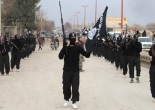
As already noted, the opposition movement is composed of a number of disparate elements – including AQ – and any one group could use these weapons against their opposition, blame it on Assad and kill two birds with one stone (pun intended).

AQ’s weaponry, power and influence within the rebellion has risen mainly because, unlike western nations, Middle Eastern countries have strongly supported some of the more conservative elements within the rebellion.

While this has prevented the anti-Assad movement from collapsing, it also makes things exponentially more awkward for those who want to support the rebels as it’s unavoidable that some of their weapons will get to AQ.

This will further strengthen AQ, not to mention give more verbal ammunition for Senator McCain and that is a loss-loss for everyone.

It’s clear that if the US intervenes in Syria it will have to fight two battles: first against Assad and then against AQ once the government falls. The only logical solution then is to support Assad against AQ, use that influence to call for positive democratic change, limit Syria’s support for Hezbollah and counter Iran’s influence.

On the other hand, we are talking about the US government so anything that makes logical sense is unlikely to happen. Consequently, let’s get ready to formally begin “Iraq 2” and enter the Syrian conflict.

Pakistan: Elections Won’t Change Status Quo; Media Darlings Unlikely to Generate Votes

Pakistan is preparing to hold general elections sometime in the next two months and even though the country’s relative importance has dimmed, its presence as a fulcrum on a number of global issues means it remains a valuable player on the world stage. Consequently, multiple nations including China, India and the United States are watching these elections closely and predicting who they will have to deal with over the next few years.

However, before discussing the elections, one should consider whether the elections will actually take place. Pakistan stands on shaky security ground, facing threats from multiple internal and external actors including criminal enterprises and discontent civilians – the latter sure to grow as temperatures and prices increase while electricity supplies decrease. Consequently, it’s conceivable the military will assess these elections will cause an untenable increase in instability and thus postpone them for an indeterminate period.

While reasonable, I don’t believe this will happen unless there is a dramatic security incident – on the scale of the assassination of a major political figure. Barring such an event, Pakistanis will most likely go to the polls in the next two months.

The second issue to assess is whether these elections will be fair or marred with irregularities. Any part-time watcher of Pakistani politicians will admit these elections will not be impartial and intimidation will occur.

Expecting anything else will be unfair, not only to the country’s political history but also to the enormous efforts made by the ruling parties who, most surely, have been working diligently for months to set up a ground game that will efficiently steal votes from suspecting and unsuspecting citizens.

Rather, a more pertinent query is whether these efforts will have a noteworthy impact on the outcome. This won’t be obvious until election time but one could reasonably assume that protests against real or perceived voter fraud will almost certainly follow the results – regardless of whoever wins.

Since the assessment is the elections will be held, the next question is about the relative strength of the political parties.

The Pakistani media and youth have obviously fallen in love with the former-cricket captain Imran Khan. Even though Khan is well known to be the only honest politician in the country, his success over the past few decades has been negligible. The assumption is that given the strong turbulence in Pakistan – most of it blamed on the ruling party – this is the year for Khan to take the crown and take his place among the country’s political elite.

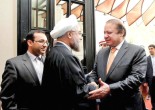
In the meantime, former Prime Minister Nawaz Sharif waits patiently for his return to the political limelight. His brother already governs Pakistan’s most populous and powerful province which significantly improves Mr. Sharif’s chances of riding a win in Punjab all the way to Islamabad.

The ruling Pakistan’s Peoples Party (PPP), on the other hand, has seen its popularity plummet. In addition, it is also trying to resolve internal conflicts as Pakistan’s president and PPP co-chairman Asif Ali Zardari works to set up a handover to his young son and political novice, Bilawal Zardari.

Tangentially, former president and famed commando Pervaiz Musharraf recently parachuted into Pakistan on the promise of returning the country to its former glory. However, almost no one believes either him or his ability to deliver on anything. Thus, he is unlikely to make a major impact in the polls and likely to either get arrested or depart for distant shores once again.

Having set up the players (barring one exception who I reference below), let’s now focus on predicting the election outcome. In addition, let’s ignore the fact that it’s never a good idea to make such predictions about Pakistan since fortunes in that country change with every drone strike.

The first prediction is that Imran Khan will not win a significant number of votes. There are a number of reasons for this prediction but the primary rationale lies in the cricketing hero’s support base which is composed of the young and educated people in Karachi and Lahore. These cities are controlled by the MQM (the heretofore unmentioned political powerhouse) and PML (N) respectively. Consequently, these two parties will win a majority of the votes and undercut Khan’s success.

All will not be lost though as Imran Khan’s party will almost certainly win more seats than in the previous election but since that is such a low bar, these wins won’t make him a major singular political player.

It’s relatively definite that Nawaz Sharif’s party will win Punjab and thus maintain its status quo in that province. The PML (N) may even increase its strength in other provinces but that is unlikely to be enough for it to run the country by itself.

This leaves the provincial parties (such as the MQM) who will most likely maintain their current strength and their role as kingmakers.

Which brings us to the PPP which is likely to, once again, be the singularly majority party. Unlike the past though, its power will be much weaker.

All of this brings us to the bottom-line prediction which is that the next Pakistani government will be a coalition of various parties with conflicting interests. Zardari’s strength lies in marshalling these forces to follow his lead and Sharif will only be able to return to power if he is able to duplicate his nemesis’ skills.

Speaking of individuals who have master manipulative skills, one should not underestimate Pakistan’s Chief Justice Iftikhar Chaudry. While the judiciary will not support Zardari, both Khan and Sharif should (and likely are) actively seek his blessing.

The end result is likely to be a new prime minister and president which means that while the orchestra will change, the tunes will remain the same.

Iraq: Compliance with US Demand to Stop Allowing Iranian Support for Syria Unlikely

iraq Iraqi Prime Minister Nouri al-Maliki found himself in US Secretary of State John Kerry’s cross-hairslast week when the two leaders engaged in “spirited discussions” regarding Iran’s use of Iraqi airspace to supply resources to the Syrian government.

In his comments to the global media, Secretary Kerry stated the US belief that Iranian support was hurting western-backed rebel groups and raising questions about Iraq’s reliability as “a partner.”

The US government has long been concerned that Iran was using its humanitarian flights to Syria to provide weapons to the Assad regime. In order to prevent such weapons transfers, Washington had convinced Iraq to inspect Iranian planes using its airspace to ensure they were only carrying aid for the Syrian civilians.

However, Iraq’s compliance has been quite sparse and the US clearly believes that military supplies are freely flowing to the Syrian government.

Washington, therefore, wants Baghdad to increase these inspections and is using two arguments – loyalty and self-preservation – to motivate the Maliki administration.

The former is obvious since the current Iraqi government would not have been possible without US support, exchequer and lives. Hence, the US believes that now is the time for Maliki to show his gratitude and Iraq’s reliability as a partner by supporting its request.

The latter argument is a little shaky since it’s based on some uncertain factors. This line of reasoning is that allowing these flights will increase anti-Iraq fervor among the rebels, weaken the western-backed opposition, empower al Qaeda and, subsequently, hurt Iraqi stability.

I don’t necessarily disagree with this logic but the fact is that it ignores some basic facts.

Firstly, the Syrian opposition is already rife with al Qaeda linked extremists. Groups such as Jabhat al-Nusra – a designated terrorist organization – are quite popular among the rebels and unless Washington can show Iraq how it will prevent them from getting access to western weapons, it makes sense for Baghdad to play both sides of the fence.

Secondly, even if the US was able to prove its logic, the Iraqi prime minister is unlikely to support this policy because of his long-term relationships with Iran and Syria. This dependence is also rising with a declining US presence in Iraq as Maliki relies on his Shia neighbors to maintain his power base – especially valuable because of the upcoming provincial elections.

Finally, even if Iraq were to increase these inspections and the rebels won in Syria, a Sunni-led government could encourage Sunnis in Iraq to rise up against the Shia-led Iraqi power structure and the current government will do whatever it can to prevent this development.
Therefore, the bottom-line is that, in the present circumstances, Iraq is unlikely to begin across-the-board inspections of these flights.

This inaction – or relative non-compliance – presents a major problem for the United States as Washington increases its support for the Syrian rebels. Indeed, one could argue the Secretary Kerry’s proposal and recent statements from Congressman Mike Rogers and Senators Carl Levin and John McCain essentially telegraph a more active US role in the conflict.

Unless Iraqi participation in this conflict is minimized, Washington could well be forced into a clash with a nation that it freed from a tyrannical regime at a cost of trillions of dollars and over four thousand American lives just a decade ago. If that happens, then the Iraq invasion may well turn out to be biggest ever blunder in the history of US foreign policy.

Iraq: Moving Forward Will Need International Guidance in Managing Influential Neighbors and Internal Pressures

Over the past few days, there have been a number of excellent articles and posts written on the reasons for and behind the US invasion of Iraq. While these have been interesting and valuable, I wanted to write something that looked ahead and not behind.

History is important but the present and future are more valuable and, therefore, I am focusing this piece on the challenges and opportunities facing this Middle Eastern Shia-majority oil rich nation as it attempts to maintain some semblance of peace and unity.

Iraq faces a number of formidable challenges, none more so than the sectarian animosity between the Shia and Sunnis.
During his administration, Saddam Hussain kept a lid on this hostility by the sheer brutality of his policies but his departure brought this enmity out into the open – apparently to the surprise of the US government. Since then, it has continued to rise and shows no signs of abating.

Therefore, due to its longstanding nature, scope and size, I believe this friction to be the most significant internal threat to Iraqi unity.

The other major challenge is of a political nature as the country’s present leadership – in no surprise to Middle East-watchers – has become increasingly power-hungry. This could have a significantly negative impact on the nation as the ambitions of Iraq’s political establishment could undermine the very government institutions that can develop this fledgling nation. For instance, the current prime minister, Nouri al-Maliki, has shrewdly enhanced his influence through a number of actions (such as appointing incompetent cronies) that have benefited him and his supporters but hurt his homeland.

Iraq’s geo-political challenges include being pulled in different directions by its two powerful neighbors who have widely divergent and contradictory interests.

Saudi Arabia, Iraq’s southwestern neighbor, wants to support the Sunni minority, ensure the stability of the oil market and prevent the Shia from becoming too powerful and influencing those in Bahrain and within its borders. On the other hand, Iran, its eastern neighbor, has the opposite agenda including using Iraq against the United States.

In the meantime, the US wants Iraq to be a beacon of democracy and stability in an undemocratic and unstable Middle East. In addition, if Iraq can start shipping its oil and reduce global crude oil prices, so much the better.

Stuck in the middle are Iraqis who don’t know which way to turn. Consequently, it’s very important that the country have a stable political structure as this could prevent one group from driving the country into a preferred direction.

Iraq also faces threats that it cannot control. These include developments in its neighboring countries such as Syria and Jordan. Refugees from the former could overwhelm a social structure already stretched to the limit while instability in the latter country could present some formidable challenges.

Finally, there is the impact from Iran-US relations. If its neighbor is attacked, then the Shia-led Iraqi government will be forced to choose between a nation that brought it into power (the United States) and one with whom it has a cultural history and affinity (Iran). That will be a formidable challenge and likely only solvable with huge tranches of “aid.”

I don’t mean to imply that there aren’t any slivers of sunshine in this story. The country’s untapped natural resources provide significant opportunities for the local and global markets. One need only look at how the Kurds have managed their region – with its high economic growth rates, relative stability and growing prosperity – to understand the potential for Iraq.

On the other hand, the Kurds also pose a formidable challenge because if Baghdad does not get its house in order, that ethnic group could well be the first minority to secede from the union. The Kurds don’t want support from the central government and only need access to pipelines to ship their oil to the global markets. Plus, they have shown the capability and aptitude for self-rule.

If this does happen, the Sunnis will demand the same – breaking Iraq apart – and Turkey, nervous about its own Kurdish population, will undertake aggressive countermeasures. Indeed, if the Sunni-Shia conflict is the biggest internal threat to Iraqi stability, then surely this has to be the most significant external threat.

A decade since US troops freed Iraq from a vicious and dynamic tyrant, the nation finds itself once again fighting against a prime minister who wants to retain power for an indeterminate period, powerful neighbors who are pulling it in different directions and internal economic and religious animosity.

It may be too soon to judge whether the disposal of Saddam Hussain was beneficial or detrimental for Iraq but its clear this nation faces pressures that it may not be able to handle without US and western support. Consequently, while western military forces may have left Iraq, western presence and influence will likely continue to be present for some time.

Pakistan: Iran’s Plan to Develop Gas Pipeline and Refinery Unlikely to Amount to Anything

Energy shortages are fast becoming the norm in most nations and nowhere is this truer than in Pakistan where energy demand far outpaces resources and supplies. These shortages hurt multiple sectors – national security, international trade and the domestic economy – and look to grow worse, especially as the temperatures increase.

These pose a significant political risk for the ruling Pakistan People’s Party (PPP), who, consequently, has been trumpeting the re-launch of the Iran-Pakistan gas pipeline and the signing of the Memorandum of Understanding (MoU) to build Pakistan’s largest oil refinery in the southwestern port city of Gwader.

These announcements, however, are unlikely to result in anything significant because the PPP is not interested in any long-term projects as it’s focused on winning the upcoming elections. If it wins a majority in the polls it will then have no reason to continue this project – and upset the United States – and if it loses then the incoming government will most likely pivot away from Iran and towards Saudi Arabia.

In that sense, the United States, which has expressed concerns regarding this agreement, has nothing to worry about. This all could change, though, if China decides to support this pipeline and refinery.

To fully appreciate my assessment, one needs to understand the history of this project that first began in 1994 as the Iran-Pakistan-India pipeline with the goal of carrying gas from Iran through Pakistan to India. New Delhi’s departure from this venture in 2009 removed the end-use customer and left the pipeline in limbo. Despite this development, Iran continued to develop its end of the pipeline and, according to multiple reports, has completed most of this construction.

In the meantime, the economy of both countries has continued on a downward trajectory while Pakistan’s energy crisis has grown exponentially. While this makes the project more attractive to Islamabad, its lack of funds is forcing Iran to motivate its neighbor by offering 100,000 barrels per day of crude on deferred payment and $500 million of the $1.5 billion needed to finish the construction.

One should keep in mind, though, that this is just an offer and no money has – or will likely – change hands.

Iran’s enthusiasm for this project has less to do with Pakistan and more with China because Tehran likely wants to replace India with the other growing Asian economy while Beijing wants a reliable source of energy supplies. Furthermore, since China controls the Gwader port (where the Iran-Pakistan pipeline will end and the oil refinery built), it has already become an affiliate of this project.

Obviously, these developments are causing major concerns in the United States who continues to try and isolate Iran from the global economic community. Washington had offered to fund the construction of an alternative pipeline through Turkmenistan but since that project involved Afghanistan, security and geo-political issues doomed it from the beginning.

US pressure on Pakistan will continue through the International Monetary Fund (IMF) who was recently approached by Pakistan for a loan of up to $5 billion, sanctions under the Iran Sanctions Act and the influence of allies such as Saudi Arabia; indeed, Qatar’s recent offer of low-priced natural gas supplies may have been one such inducement. On the other hand, given the country’s dire situation and to prevent an Islamist takeover, Washington may grant a waiver similar to the one given to India, China, and Turkey.

I believe the US does not need to worry about the Iran-Pakistan pipeline and refinery project because it won’t amount to anything. As I noted above, if the PPP loses the upcoming election then the new government will pivot away from Iran and towards Saudi Arabia thereby ending (if only for the time being) this project; even if the PPP wins the election, economic pressure from the US will essentially have the same effect.

Secondly, any pipeline on Pakistan’s side of the border will have to go through Baluchistan and that province’s fragile security will delay the timeline and raise the costs. Furthermore, they will negatively impact motivation and this will affect Chinese involvement because – similar to what’s going on in Afghanistan – Beijing is prepared to wait for access to resources but not for an indeterminate amount of time.

The US, however, should be proactive and use allies such as Saudi Arabia and Qatar to provide discounted energy to Pakistan – especially its new government. Furthermore, it should focus on developing the country’s energy infrastructure through organizations such as the World Bank, IMF and the Export-Import Bank.

The upcoming elections will provide a new opportunity for Washington to engage and influence Pakistan; the question now is whether the US is up to that challenge.

Syria: Refugees Wait for Support while Rebels Prepare to Receive Lethal Aid

The growing violence of Syria’s two-year old Arab Spring uprising has claimed 70,000 lives and made four million of the country’s 22 million residents refugees. While the international community argues over whether it should arm anti-government forces, neighboring countries are straining to support the growing number of exiles.

In the meantime, the rebels are becoming progressively unpredictable, fundamentalist and vicious thereby increasing the chances that any western nation which arms them will likely see those weapons fall into the hands of fundamentalist Islamists or global militant movements.

Despite these concerns, France and the United Kingdom recently urged the European Union (EU) to lift its arms embargo on the Syrian opposition so that they can provide advanced weapons to the opposition – the French have raised the possibility of anti-aircraft missiles – in order to scare President Assad into a dialogue.

This demand by Paris and London shows how the level of government concern as the EU’s ban will expire on May 31. A renewal must be approved by all EU member nations and, since the French and UK governments have already announced they will not support this measure, its unlikely to occur.

The subsequent question, therefore, is whether both these governments will break the ban before its term expires. This is quite likely since the UK has already effectively undercut this measure by convincing the EU to allow non-lethal aid such as armored vehicles to the rebels. Providing actual arms is the logical next step and, given the dire security conditions in Syria, the French and UK governments are likely to take this action in the immediate future.

President Hollande and Prime Minister Cameron, however, must be considering about how this decision will affect their relations with Germany and Russia who don’t support arming the opposition. The former nation is concerned that arming rebels could lead to the proliferation of weapons to undesirable entities while the latter is a long-term Assad ally and provides military support to the central government.

While Moscow’s decision could be termed as self-serving, Berlin’s worries are shared by a wider group of non-partisan organizations such as Amnesty International and the International Institute for Strategic Studies who have reported on the abuses committed by the rebels caused by a lack of central authority, fundamentalism and disunity.

These human rights violations reflect the highly sectarian nature of this conflict, which, according to reports, have been fanned by support from Iran (and its proxy Hezbollah) and Saudi Arabia. Tehran provides aid to Shi’ite groups and Assad’s Alawite sect while Riyadh Saudi aids the Sunnis. The battlefield success of these groups has been due to this assistance and they have used this influence to increase their power throughout the country. For example, following the capture of the eastern city of Raqqa, the Islamists created a Shariah Board with its own police force.

The Syrian regime, on the other hand, is fast running out of geography and loyalists. Damascus, while ostensibly under government control, has recently experienced shellings and car bombings, and, according to multiple reports, the number of troops loyal to the regime has declined to under 65,000. Faced with these larger losses, the government has resorted to using lethal weapons such as cluster bombs and air attacks on residential areas.

Given this evidence, it could be argued that western governments should increase their influence with moderate groups by giving them the resources to stand up to both the Syrian regime and the Islamists. This would be a logical decision but the nations providing need to make sure their weapons don’t fall into the hands of the Islamists in Syria or are transported out of the country.

Furthermore, they also need to ensure the creation and acceptance of a central authority. As proved by the recent kidnapping of United Nations peacekeepers, the opposition movement needs institutions that direct its actions and stamps out the increasing abuses. Indeed, the United States’ recently announced $60 million aid package is directed towards supporting local councils and “transition initiatives.”

There is one area, however, where the global community can make the largest and quickest positive difference and that is in the treatment of Syrian refugees. Nations such as Jordan, Lebanon, Turkey, Egypt and Iraq are buckling under the fast rising number of innocent civilians crossing their border to escape the violence in their homeland.

In the meantime, these hosting nations have only received approximately one-fifth of the promised funds. Consequently, it shouldn’t surprise anyone if these countries, unable to handle the masses of people, close their borders plunging the region into even further crisis.

Military support may well help bring about the transition of the Syrian government but without adequate humanitarian support, a larger crisis could waste all the lives lost and sacrifices made.